A Full Circle Moment: How Two Childhood Friends Found Their Way Back to EPI
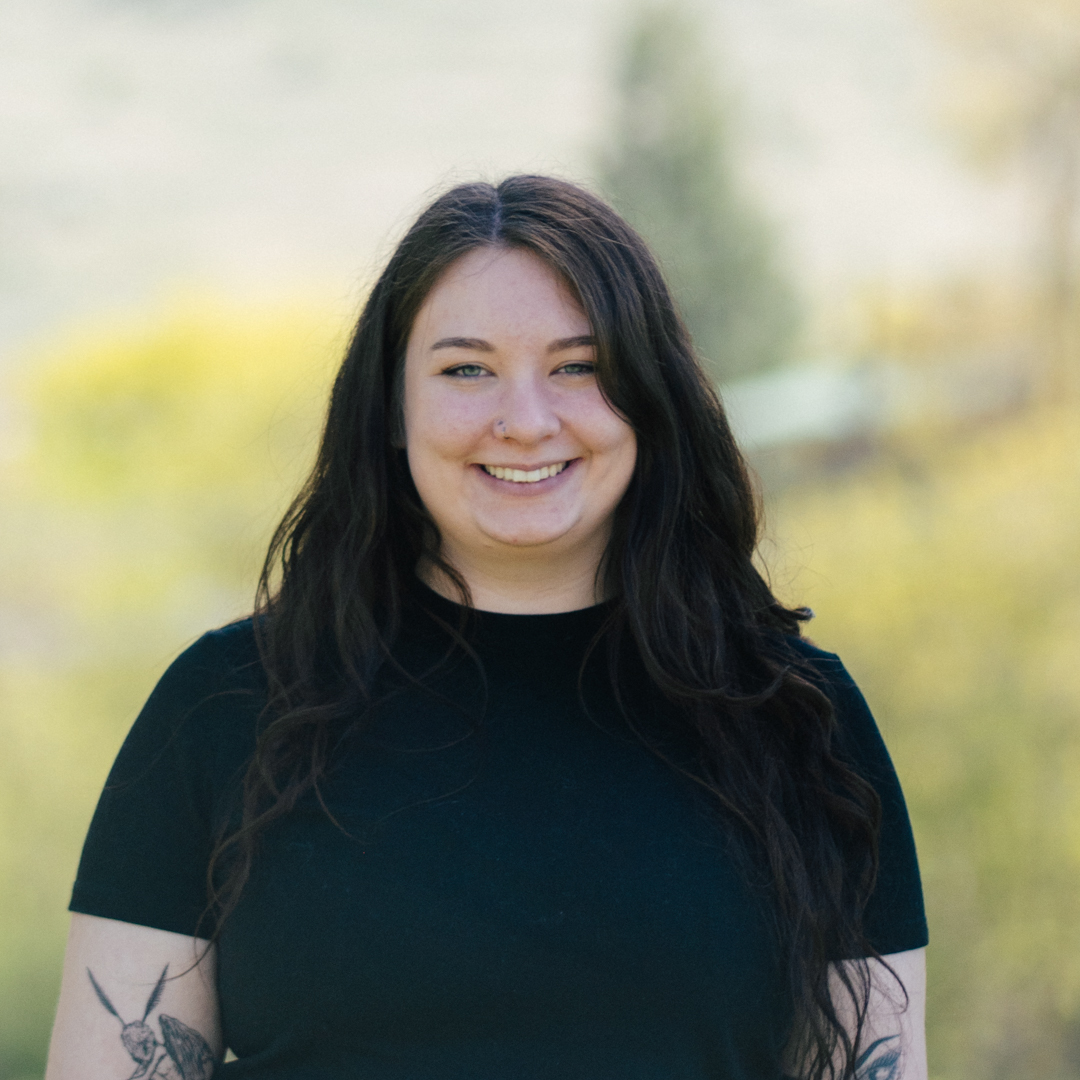
I have spent my whole life in Missoula, Montana. A beautiful place with plenty of outdoor spaces and wildlife, but little diversity and understanding of cultures apart from my own. I was lucky enough to spend my formative years at a Spanish immersion school, learning people and places that I otherwise would have had no access to. This is where I met Gabriella. We were fast friends and grew up and learned together for 11 years of our lives.

Twelve years ago, Gabriella and I had the opportunity to travel to La Paz, Mexico on our very first EPI course. We couldn’t conceptualize how transformative this experience would be for us, but even now we look back on our time in Mexico with only fondness and an acknowledgement of how the experience helped shape us.
Many years after going our separate ways, a twist of fate landed both Gabriella and I back at EPI, this time with the goal of getting as many kids as possible out into the field to have the same pivotal experience as we did.
We sat down to have an interview of sorts and reflect on our experience with EPI.
Who are we? Find out!
Mari: Hi Gabri, I obviously know you well but for the purpose of this interview, shall we start by sharing a bit about ourselves?
Gabriella: Yes! I’m Gabri and I’m from Missoula. I went to the Missoula International School from pre-K through 8th grade where I was first introduced to EPI. I attended high school at Hellgate, then hopped the pond to get my undergraduate degree in Switzerland, and my master’s degree in the Netherlands and New Zealand. I love to travel, if you couldn’t tell! My educational background is in international education and cultural sociology. I love getting kids outside and abroad, and am currently thriving in program management. Another thing about me is that I love phone-free experiences, I think it’s super important to be present and connect face to face.
M: Awesome! Well it’s good to be re-introduced to you, and I suppose I should do the same. My background is very similar. I went to Missoula International school, which is where I met you, of course, and learned Spanish. I also went to Hellgate High School but then went on to get my undergraduate degree in art. I have worked with kids my whole life, so I have gotten to see first-hand how important being outside and being exposed to different cultures is to their development.
We all have favorites, what were ours?

G: Do we want to talk a bit about our experience in Mexico?
M: Of course we do, we talk about it often enough, so might as well do it again! What were some of your favorite memories?
G: Wow, there are so many. For starters, I’ll never forget swimming with jellyfish. I had to ask if you remembered it too, because I thought I dreamed it.
M: Oh, I remember. They were so small and it was like we were swimming through a cloud!
G: Right? We also swam with sealions. The babies came up to our group and were brushing up against us- they were so playful. All my memories from the island were amazing really, you can’t beat sleeping under the stars every night.
M: So true.
G: Do you remember walking around the malecón in La Paz? I wish I could go back and eat the paletas that we had again, they were delicious.
M: The food overall was incredible. You and I have talked about this, but I can’t get over the tortillas.
G: Yes! The tortillas!
We talk a lot about how much we learned on our course, here is a little bit about our key takeaways:
M: One of the things that made our course unique was that we had local Mexican students come with us. I feel like that was a huge growth and learning experience for me.
G: Absolutely, I definitely came away from my time with them realizing just how much we had in common, and also how privileged I was to grow up bilingual and able to connect with them through shared language.
M: I totally agree, being able to speak Spanish has opened doors for me that I would not have had access to otherwise. It was so cool to learn about Mexican culture from people our own age, not just from a textbook.
M: Overall though I think I learned how to work with my peers more effectively. When you have to work together in a new situation and you are spending a whole week together, you definitely bond in a whole new way.

A new world- how we learned a little something about being independent:
G: I remember how nervous I was to go on this trip. As a middle schooler it was really hard for me to think about being away from my parents for over a week. Once I got there, I remember feeling like “oh, I can do this” and an overall sense of freedom.
M: I remember feeling the same way. I had only been away from home for a night, maybe two, before, so the concept of being in a completely different country for an extended period of time was really daunting. Once I was in La Paz, walking around the malecón and doing an independent research project on the island I realized how cool it was to be able to experience these things on my own, and in my own way.
No phones? No problem!
M: On that note, how did you feel about the unplugged policy? I think one of the things I was worried about was not being able to contact my parents or friends as usual.
G: Yeah, at first I was terrified, but ended up loving it. It allowed for a more intimate and connective environment. We were early gen-Z, so it was more a fear of not being in touch with home than social media access, although that was part of it too. Either way, it showed me as a teen what it felt like to focus on the people and places in front of me. I was so present and clear-headed. I definitely felt the social and emotional benefits of it.
M: I thoroughly agree. I did not miss my phone even for a second, I mean how could I when I was having the time of my life?

Worldview = expanded
M: We have touched on it, but I’m curious how you would say your worldview changed after our trip?
G: Good question, I felt much more connected to nature after seeing first-hand how our environment is affected by human actions and learning about what we can do to lessen our negative impacts. I also became much more culturally empathetic and open minded.
M: Absolutely, even though we were bilingual, we had never been immersed in a different cultural setting before. I think I came out of the course being less self-centered in a way, I was all of a sudden thinking about how my actions impact all of us, rather than how others actions impacted me.
M: On a more educational level, the lessons and research projects showed me that I didn’t need to be a professional to make an impact. I still think about the research project we got to do- diving to collect starfish, measuring them and checking for parasites. I remember that when the biologist we were working with told us it was part of an ongoing research project, I thought “oh, ok this is real”. I really liked feeling like we weren’t just doing activities for our sake, it was an actual contribution to real science.

Workin’ that 9-5
M: For me, working for EPI has only further impressed upon me the importance of these experiences for young people. Being on the other side, I hear from students who genuinely come out of their courses with their life changed. It always makes my day when we see a post-course reflection with rave reviews.
G: It’s so fun to see! Getting to be a part of EPI as an employee has given me a more intimate understanding of how our programming works. I have a true appreciation for our instructors, the ecosystems we work in, and the insane logistics that make our courses possible. Honestly, it makes me that much more passionate about our mission and my role in bringing this experience to youth to help expand their perspective, respect for our environment, and increase their cultural literacy.
Where to next?
M: After becoming a lot more familiar with our programs, if you were to go on another EPI course, where would you want to go?
G: I’ve thought about this before, and I’ll say our Costa Rica sea turtle ecology.
M: Good choice! Tell me a bit more about why?
G: Well, because Costa Rica is where it all began, the birthplace of EPI. I would be excited to land in the epicenter of our work and have the “classic EPI experience”. Plus, it’s pura vida! All of our Costa Rican colleagues are amazing, and I want to spend more time with them. What about you? What’s your dream EPI course?
M: Definitely Belize. I love the ocean and have always had a big interest in marine biology. I really want to learn about different aquatic ecosystems. Snorkeling and learning about new marine species is the dream.
Need advice? Here's ours!
M: To wrap it up, what was your biggest takeaway and then one piece of advice you would give to students traveling on an EPI course?
M: My biggest takeaway was: As one person - even if you’re a child or teenager- you can make a difference in our world. My piece of advice? There really isn’t an amount of preparation that will get you ready for how many new things you’re going to experience; so, embrace the newness and try to absorb as much as you can.
G: I would say my biggest takeaway is that getting outside and engaging with the world is gratifying and important for personal growth. It increases intercultural knowledge, appreciation for the world we have, and teaches us how to take care of it. As for advice: embrace fear and discomfort! Keep your mind open and let yourself have fun.


