From the Field to the Classroom: Professional Development That Actually Sticks

Chandra Dunbar took the long road to teaching. After earning her degree in systematics and ecology, working years as a research biologist, and spending over a decade as a stay-at-home mom, she went back to school to become a licensed secondary science teacher. That full circle journey shaped a conviction she carries into every lesson:
"I had sat through, I probably don’t want to know how many hours worth of sit-and-get biology classes in college and high school. And the second I stepped foot out in the field and started doing the work, everything I had learned started to click. As a student, there’s only so much you can get in a classroom, you really have to go out and experience it."
For Chandra, it was essential that her students at Osage City High School in Kansas have meaningful, hands-on experiences, not just sit and listen. She began looking for ways to build a program where students could work on real research projects. That search led her to
EPI’s professional development courses in 2021.

"I signed up for the course, went down to Costa Rica, and absolutely loved what I saw. It was exactly what I was trying to create."
What is the purpose of EPI's professional development courses? In short: getting teachers out of the classroom and helping them reconnect with their “why.” Participants engage in hands-on fieldwork alongside real researchers in biodiverse settings — Costa Rica, Belize, Mexico, the Galápagos, and Yellowstone— while also learning progressive, inquiry-based methods they can bring straight back to their classrooms.
“I use the resources all the time in my classroom,” says Chandra. In a recent biochemistry lesson, she put a water strider on the board and had students explore what chemical properties allow it to walk on water, then test those properties in a lab, research what they were, and connect them to how life is sustained in the body and in ecosystems. "Using the tools that EPI gave me," she says, "cuts my work time in half, if not even more."
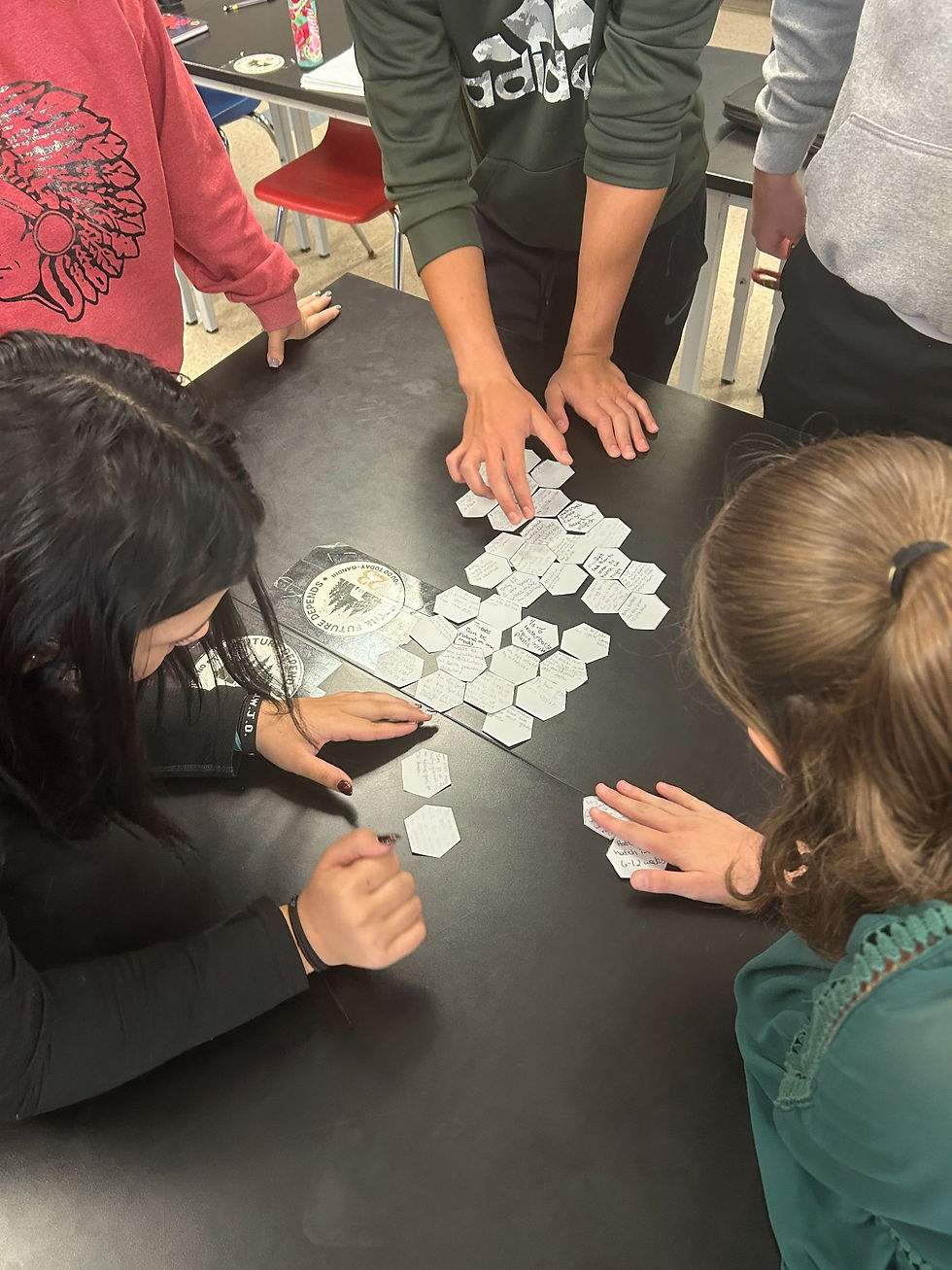
What Happens in the Classroom
And how do students respond? According to Chandra, “I see a level of engagement in my students when we’re talking about a real organism and we’re solving a real problem.”
For instance, she built a unit around the sea turtles she encountered in Costa Rica, using them as an anchoring phenomenon to teach biology as systems. She explains:
"I created a whole experience where we determined what makes something biotic versus abiotic, what the boundaries of a system are, and whether we can set a different boundary depending on what we’re studying. If I just stood up here and told students that, they’d be like, ‘what are you talking about, crazy lady?’ But when I bring up videos and pictures of us actually out there, pictures of my students, kids they actually know, in the field, then they can get it."
From there, she shifted to a unit on the reintroduction of gray wolves in Yellowstone. Students explored how the wolves affected ranchers, citizens, tourists, and the broader ecosystem, and began to see that they themselves were part of the system.
“Their engagement is through the roof,” Chandra says. “We have an hour-and-a-half block, and students constantly tell me the class goes by so fast. They come back in asking, ‘Do we get to work with the turtles today?’ That tells me they’re engaged.”
Chandra is a long-time member of the EPI community. In addition to participating in a Professional Development (PD) course in Costa Rica, she joined the 2024 PD course in Belize. Beyond her own growth as an educator, she has also inspired her students by leading them on several EPI student courses, providing them with life-changing field experiences.

A Rocky Mountain Teacher Brings the Ocean to Her Students
Birgid Niedenzu, a biology teacher at Coeur d’Alene High School in Idaho, shares a similar philosophy: professional development should be practical, applicable, and a little adventurous. She participated in an EPI course this January in Baja California Sur, Mexico, and came back with a lesson already in hand.

The lesson was about sea urchins, an unusual choice for a teacher in the middle of the Rocky Mountains, but that distance is exactly what makes it compelling for her students. She ordered live urchins, stressed them to release their gametes, and had students watch fertilization and mitosis happen under the microscope. They also examined the urchins under a dissecting scope, studied their morphology, made posters, and discussed their role in the food chain and ecosystem. They loved it.
The Value of Networking
One of the most important aspects of EPI’s professional development is the opportunity to connect with educators from different backgrounds, regions, and even countries.
“Meeting teachers from other levels of education, from other parts of the country, and from Mexico, and getting ideas from them was fantastic. Hearing about how education works in La Paz was really valuable”, Birgid says.
Chandra echoes this:
“When I’m working with other teachers, I’m connecting, learning how to approach the standards, and getting incredible ideas. We had someone from Peru, several people from the East Coast, professionals teaching the same things I am, from all over, with very different backgrounds. We learned so much from each other.”

What Would They Tell Other Teachers?
If Birgid could say one thing to a teacher considering an EPI professional development course, it would be this:
“It’s a real-world experience. It’s fun. It’s not boring professional development. It’s valid, useful, and unique. You’ll be able to tell great stories to your students.”
Chandra’s advice goes even further:
"Go and fully immerse yourself. Be open to what you can learn, and constantly think about how you can apply it. If the only reason you’re going is to better yourself, that’s a good enough reason. If you’re going with the idea of building something for your students, that’s also a good enough reason."

Ready to Take the Leap?
We hope these stories inspire you to step outside your classroom, get into the field, and discover new ways of teaching.
EPI’s professional development programs are fully aligned with the Next Generation Science Standards (NGSS), and participants can earn graduate-level credit through the University of Montana. A limited pool of financial aid funds is also available.


