Lessons from the River: Why Riparian Forests Matter More Than We Think


This article is based on insights shared during our February 3 Alumni Webinar Series presentation, Lessons from the River: Wild Habitats, Water, and Local Stewardship, featuring Radley Watkins, Executive Director of the Missoula Conservation District.
We’ve always been told that trees near rivers are important. You could say it’s common knowledge. But do we really understand why?
Yes, they help prevent flooding. But what else?
According to Radley Watkins, to truly understand this we must begin with a key concept: the watershed. A watershed is not just the stream itself but includes all the land that drains into it, functioning as a natural filtration system.
“A watershed is basically the land area that drains into a common water body. If it’s a forested watershed, it’s acting like a sponge and a filter,” explains Rad.

When rain falls or snow melts in a healthy watershed, water is absorbed into the soil, filtered and cleaned through tree roots, then gradually released into the stream. In cities covered with asphalt and concrete, water cannot soak into the ground. Instead, it runs across these surfaces, collecting oils and metals from vehicles before entering the river in a destructive, polluted surge.
When vegetation is removed and land is paved over, runoff increases dramatically from around 1% in a forested landscape to as much as 30% in urban areas, leading to flooding and erosion.
Rivers Are Dynamic by Nature
Rivers are not static. They are dynamic systems, constantly reshaping the landscape.
Along a river bend, water moves at different speeds. On the outer curve – the thalweg – a river’s current flows faster, causing erosion. On the inner curve – where water slows down – sediment is deposited, forming point bars. This ongoing interaction literally reshapes the land.
Over centuries, a river can move from one side of a valley to the other, constantly shifting because of this process. This “meandering” is fundamental. A curved stream is longer and has more surface area than a straight channel, allowing it to store more water across the landscape. Surrounding the stream is the floodplain, the space where a river expands during high flow and is later filtered by the land.
Why does this matter? If you own property along a river, erosion not only contributes to flooding; it can also cause your property to gradually diminish.
The Critical Role of the Riparian Zone
Vegetation plays a fundamental role. When property owners clear riverbanks for better views or lawns, they remove the river’s natural protection. As Rad explained, the riparian zone, the transition area between water and land, is essential to river health.

Under natural conditions, the riparian zone is covered with native vegetation like shrubs and large trees. A healthy riparian buffer prevents erosion, maintains the river’s shape, reduces flooding, and can even filter agrochemicals before they reach the water.
“The riparian zone is that buffer. It filters out herbicides, pesticides, and nitrogen before it hits the water. Without it, you’re just dumping chemicals straight into the ecosystem,” Rad says.

But degradation doesn’t only happen through eliminating vegetation. Even something as simple as failing to install fencing to keep livestock away from the stream can strip the riparian zone bare. The result? Collapsing banks and rising water temperatures that can kill fish.
“I call it death by a thousand cuts… If everybody just does one little thing to their property, mows to the edge, puts in a retaining wall, eventually the whole river system is degraded,” Rad explains.
Traditional turf grass, for example, is particularly harmful near rivers. Its roots typically extend about one foot deep, while native plants like willows grow roots four to ten feet deep, acting as a natural “rebar” that stabilizes the soil. When turf replaces native vegetation, riverbanks weaken, channels widen and shallow, and water temperatures rise beyond what aquatic life can tolerate.
The impacts run deep. As riverbanks erode, the channel cuts downward. Banks become higher and steeper, and groundwater levels drop with the river. Eventually, crop roots can no longer access water, leading to agricultural loss.
In cities where riverbanks are removed entirely and replaced with concrete, these effects multiply even further.
Restoring Rivers, Restoring Balance
For these reasons, Rad has dedicated his career to restoring riparian zones and healing rivers.
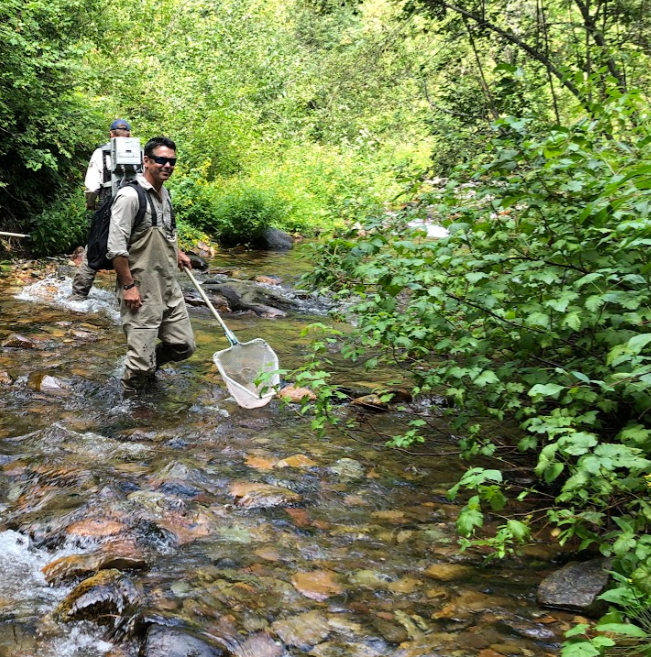
When possible, riverbanks should be covered with native vegetation even if it means sacrificing part of a scenic view or recreational beach area.
There are restoration techniques such as “willow lifts”, layers of willow branches buried into the bank that grow and stabilize the soil naturally without the need for concrete or artificial rock.
It is also crucial to “reconnect the floodplain so the water can spread out and soak in… We use natural materials like woody debris and willow cuttings to bring the river back to life,” Rad explains.

For those living in Montana, it is important to understand the state’s 310 Law, formally known as the Natural Streambed and Land Preservation Act. This law requires anyone planning a project affecting a perennial stream to obtain a permit from the local Conservation District. Its purpose is to ensure that human activity does not compromise river health.
Rad’s recommendation to property owners is simple: maintain a buffer of native vegetation at least 30 to 50 feet wide to protect this vital resource for future generations.
Rad concluded, “we have to learn to live with the river, not just try to control it… What you do on your small piece of the bank matters for the entire watershed.”
We are deeply grateful to Rad for generously sharing his time and knowledge with us. This webinar was the first in a series of six that we will host throughout the year. If you are interested in joining upcoming sessions, you can visit:https://www.ecologyproject.org/alumni-webinar-series