Shelbi St Goddard: Growing Tribal Stewardship in Piikuni Youth

Updated: Mar 5
In mid-September, I had the privilege of speaking with Shelbi St Goddard, the Tribal Partnerships Liaison at Montana Conservation Corps (MCC). Kind, well-spoken, and passionate about her work, Shelbi – an EPI chaperone and proud member of the Blackfeet Nation – spoke with me about her role in the Piikuni Lands Service Corps (PLSC).

The Piikuni Lands Service Corps is an MCC program dedicated to training teens and young adults of the Blackfeet Nation in conservation service and job skills. Centering personal development and meaningful conservation work on both tribal and public lands, the PLSC runs two 10-week summer sessions and a high school Youth Program in Browning, Montana.
Launched in the mid-2010’s, the Service Corps started through an effort to build connections with local tribes and engage native youth in conservation work. Initiated by Clifford Kipp, MCC’s previous Senior Regional Director in Kalispell, the idea was presented to tribal stewards and blossomed into concrete plans to form a conservation crew.
Growing up in Montana’s open air on a family ranch, Shelbi knew she wanted to pursue a career in fieldwork. After finishing high school, she completed an agriculture-focused internship with the USDA Indian Nation Conservation Alliance. Unsure of whether to continue forward in conservation or agricultural work, she went undeclared to college, eventually choosing to pursue a degree in Environmental Science and Sustainability at the University of Montana. Now, years later, Shelbi has grown in her career with MCC and the Piikuni Lands Service Corps.

The PLSC, which operates in Northwestern Montana, has two eight-person crews consisting of six crew members and two leaders. Members consist of young adults from the Blackfeet Nation ages 18-30, or 35 for veterans, that engage in conservation projects with partnering organizations across the state.
In addition, the Service Corps offers a youth program supporting Browning High School students, introducing them to the field of conservation through career days where students visit their ancestral lands in Glacier National Park. In addition to learning about park jobs and meeting rangers, students engage in activities like avalanche data analysis and native plant restoration. Last year, they expanded the program to include a trip to Yellowstone with EPI.
An integral part of PLSC’s curriculum is the incorporation of Traditional Ecological Knowledge (TEK) – geographically specific knowledge, beliefs, and practices held by indigenous peoples related to the relationship between living beings and the environment.
Largely passed down through oral traditions, this rich body of knowledge includes spiritual and cultural aspects based on centuries of lived experience and direct contact with local ecosystems.
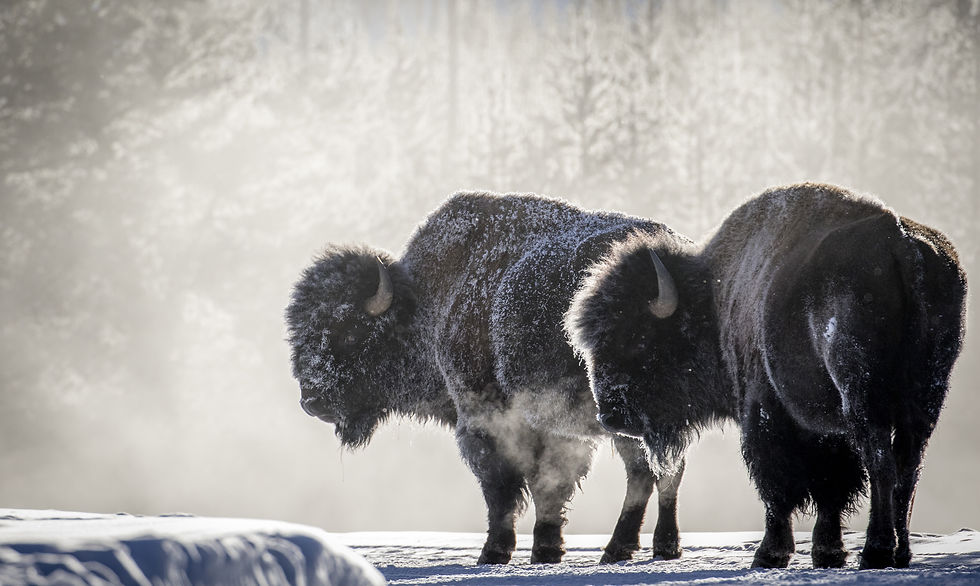
Much of the TEK incorporated into the Service Corps curriculum comes from elders in Shelbi’s community. Tribal elders, she explained, join the Corps at different points in the summer, teaching members about plant identification, the cultural and ecological significance of bison, and creation stories connected to Piikuni ancestry. In turn, members of the Service Corps engage with the land through a lens of cultural significance, relevance, and care.

Throughout our conversation, Shelbi’s deep commitment to environmental stewardship shined through. Central to her career pursuits is a dedication to bridging the gap between federal agencies and tribal nations. Shelbi told me that throughout her education she learned a lot about land management, which sparked a passion in her: wanting native people to have a seat at the table when it comes to conversations about land management. Indeed, the Piikuni Lands Service Corps was not always representative of the group it serves.
Previously, MCC brought non-native leaders to facilitate the program, but in the years following the COVID-19 pandemic, native members advocated to lead, oversee and staff the program.

Shelbi highlighted the positive impact the Service Corp’s post-COVID revamp has had. With the involvement of people who know the importance of the land from a native perspective, the service Corps now better serves, supports and represents its members.
In the future, Shelbi hopes to see their own curriculum – based around Piikuni traditions, beliefs and practices – incorporated into conservation education. Furthermore, she hopes to have programs like PLSC for all tribes across Montana. She envisions a future in which tribes across the state convene on best practices, research, and shared knowledge, helping one another steward the land and support youth in continuing conservation service.
For more information on the Service Corps, visit: https://www.mtcorps.org/joinmcc/amskapi-piikuni-partnership/amskapi-piikuni-partnership.html
For more information on Shelbi, visit: https://www.mtcorps.org/about-us/staff.html/title/shelbi-st-goddard-tribal-partnership-manager