From Yellowstone to the Olympic Peninsula: An educator shaped by many landscapes


At just 23 years old, Maeve Cain has lived a lot, and in a lot of places. From west to east and back again, she has called California, Vermont, Montana, Idaho, and Washington home. But what's interesting isn't just where she's lived, it's what she's done along the way.
In that journey, she has taught in Yellowstone, instructed ski lessons in Idaho, and now works as a science educator in one of the most diverse national parks in the world: Olympic National Park in Washington. And we're proud to say that EPI has been part of that path.
"I feel very privileged to have lived in so many places and to be able to continue to explore learning about myself through different kinds of work and different landscapes," says Maeve, who always carries a warm smile and an easy, welcoming presence.
She grew up in Northern California, but crossed the country to study Environmental Studies, with minors in Place-Based Education and Food Systems, at the University of Vermont. That's where her teaching philosophy took root: getting "students to engage with their hands on the content that they're working with."
During that time, she worked as a teaching assistant at her university, running labs for the environmental studies course. She then took that hands-on spirit to Shelburne Farms, where she worked in farm education at a summer camp. "
That was an amazing group of people to learn from, and a lot of learning by doing as well, seeing animals, engaging with them, harvesting food, and then cooking with it. It was a really wonderful experience."

The Mark That Yellowstone Left
As graduation approached, Maeve didn't have a fixed plan for what came next, she just knew she didn't want to stay in Vermont. She loved it there, but she was ready for something new.
It was while procrastinating in the library that she stumbled upon a seasonal position with EPI in Montana. She applied, things moved quickly, and before she knew it, the timeline conflicted with her own graduation ceremony. She walked across the stage and flew straight to Montana, jumping into her first EPI field program as soon as she arrived.
What drew her to EPI, she explains, was the organization's commitment to local students and the access it creates for young people to experience the outdoors.
Her very first group was from the Wolf Point indigenous reservation in Montana. Many of these students had never left the reservation, making the experience all the more meaningful for everyone involved.

Maeve still lights up when she recalls a small group of boys from that trip who caught her completely off guard:
"Every day, whenever they had some free time, they would go to the beaver dam and make observations. They quickly learned that if they were chatting and making noise, the beavers wouldn't come out. They were becoming scientists in their own way. They totally were making these really wonderful observations."
For Maeve, that first professional experience after graduation was pivotal. It gave her the chance to put classroom learning into practice and solidified her passion for place-based education.
Beyond the environmental dimension, she also learned to weave indigenous history and diverse local perspectives into her teaching, including the complex, often tense relationship between ranchers and scientists over wolf management in the Greater Yellowstone Ecosystem.
"Everyone in the office and in the field were incredibly supportive and very communicative, and prepared us as instructors the best that they could for all the variables that might come with outdoor educating," she adds.

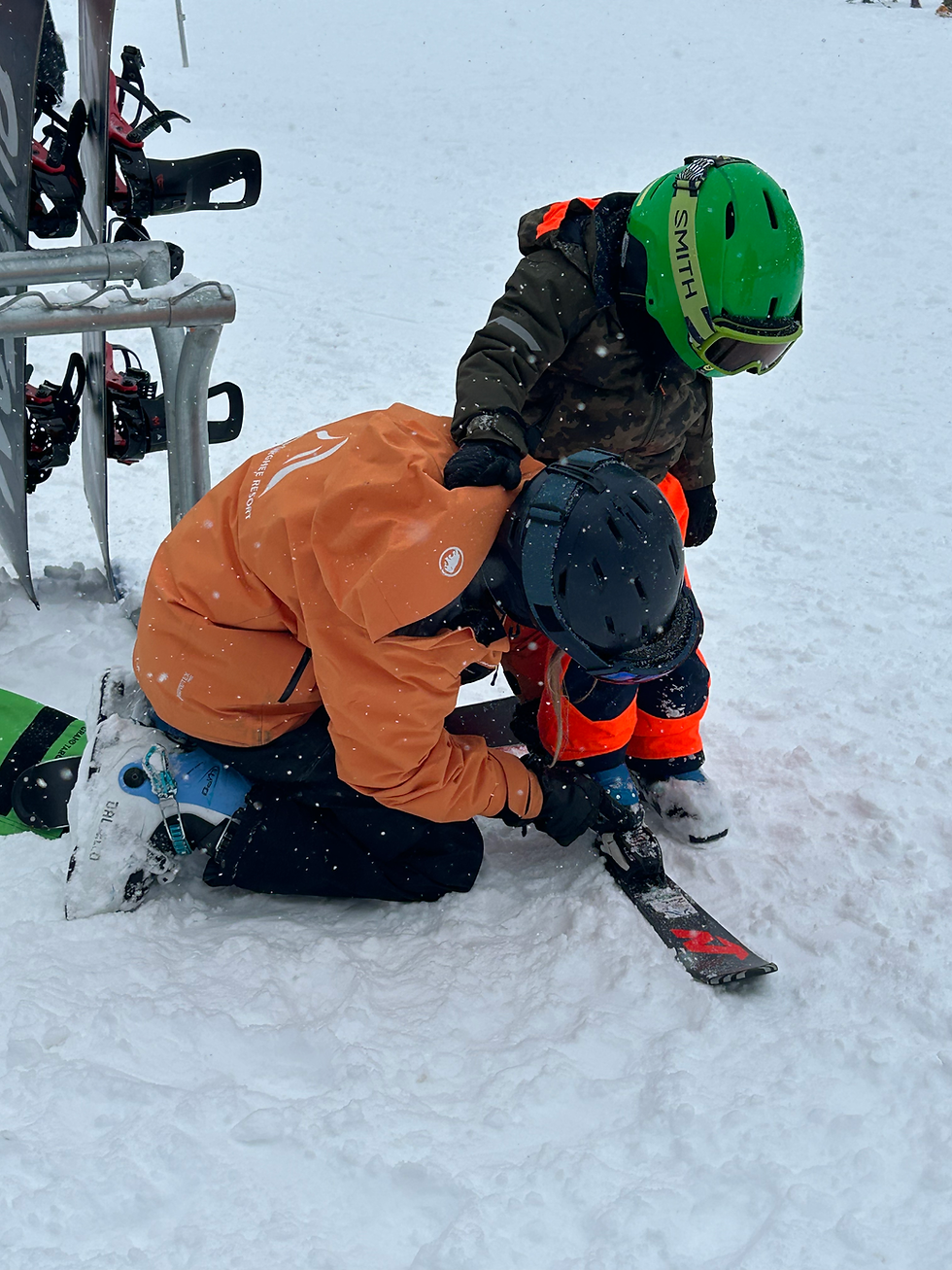
After her summer with EPI, Maeve kept moving. She headed to Idaho, where she worked as a ski instructor at Grand Targhee and picked up some landscaping work on the side. She kept traveling, always looking for experiences that combined nature, community, and education, until her path led her to Olympic National Park.
Bringing It All Together at the Park
Maeve is currently in a five-month position as an Education Assistant through Scientists in Parks, a collaboration between the National Park Service, AmeriCorps, and the Geological Society of America.
The park itself is a stunning setting of 922,651 acres on Washington's Olympic Peninsula, spanning three distinct ecosystems: glacier-capped mountains, temperate rainforest, and Pacific coastline. It is also home to eight indigenous tribes with an active, living presence in the area.
There, Maeve leads field trips for local elementary and middle school students, putting everything she has learned about outdoor education into action. She's also contributing to the development of a new curriculum for third graders.

She's clear about how her time with EPI prepared her for this:
"There are a lot of different Indigenous tribes that are still here and have a really large presence, and I think working for EPI kind of helped set me up with a better understanding of how to honor that history in teaching."
And reflecting on the broader impact of her time as a seasonal instructor, she puts it simply:
"A seasonal job can be so brief... but just that little amount of time can be so full of really informative experiences and has definitely helped shape who I am as an educator and a person."
While the position is temporary, she looks ahead with optimism. "I definitely hope to continue to be an educator, in whatever capacity that takes, that's the plan." Wherever the road takes her next, we have no doubt she'll leave a mark, as she always does, with a warm smile and a lot to teach.


